Announcement

Collapse
No announcement yet.

Plasma Ignition | Plasma Jet Ignition

Collapse
X
 
  • Filter
  • Time
  • Show
Clear All
new posts

  • Gary Hammond
    replied
    Hi Soundude,

    Originally posted by heysoundude View Post
    .....................If your guy is running engines on 5% gasoline and 95% water.............
    There's no "IF" involved. He's doing it. I saw it with my own eyes! Not only is he running engines on 95% water, his process will run the engine on 100% water if plasma ignition is used. This process mimics what takes place in a thundercloud. Follow my other postings and links to learn more about this process.

    The 5% fuel is required only to start the combustion of the treated water vapor when conventional ignition is used. What I showed in the video is his generator running with the conventional ignition that came on it. The water is totally disassociated and restructured by his treatment process becoming a volatile mix inside the combustion chamber. You have to remember that air is also in the mix, so it is possible for many combustible compounds to form in the presence of the plasma thru a transmutation process.

    Whether the gasoline vapor and treated water vapor bond momentarily is not the point. Any accelerant can be used in the mix to initiate combustion with conventional ignition. I doubt that bonding is required, as the process is designed to BREAK the natural water bonds and disassociate the atomic structure of the water.

    If you want to make a propane bubbler blow torch with your own bucket go ahead and do it to check out your theory. The point of my experimentation is not to make a propane blow torch, as I already have a pretty robust one in the form of a weed burner.

    Leave a comment:


  • heysoundude
    replied
    Originally posted by Gary Hammond View Post
    Since propane is heavier than air, I'm not sure I want it collecting in the bucket. It just might prove out the "Big Bang Theory" when and if it ignites.
    It would be confirming or disproving a bonding with the water vapour though...
    If your guy is running engines on 5% gasoline and 95% water, all you'd need to do for this is to be able to measure the propane:water properly. you can measure how much water gets vapourized per hour; the trick will be to meter out the propane as accurately for a similar ratio. the more I ponder it, the better my bubbler thought seems to appear.

    Leave a comment:


  • Faraday88
    replied
    Originally posted by Gary Hammond View Post
    Since propane is heavier than air, I'm not sure I want it collecting in the bucket. It just might prove out the "Big Bang Theory" when and if it ignites.
    or disprove its original bases!!!
    just kidding
    Rgds,
    Faraday88

    Leave a comment:


  • Gary Hammond
    replied
    Originally posted by heysoundude View Post
    .........Can you replicate the test apparatus in the videos, feeding the propane in as I suggested? I'd wager it would burn completely diffferently, being somewhat more homogenized with the water vapor. I'd wager further that it wouldn't take very much propane at all to get a column of flame at each plasma event (I'd slow the firing rate down to 100rpm or so, as well)...but only if you can do it outdoors. this would be something to see. or maybe you could bubble the propane into the water as it gets fog-ified? Hmmmm...
    Since propane is heavier than air, I'm not sure I want it collecting in the bucket. It just might prove out the "Big Bang Theory" when and if it ignites.

    Leave a comment:


  • heysoundude
    replied
    I think the water vapor causes the fuel molecules to stretch out on its surface, and that makes the hydrocarbons easier to burn. I'm thinking of oil streamers on a driveway after a rain, the rainbowy stuff...
    alcohol is entirely different: it's hydrophilic, bonding to the water molecules in the airstream (which might be one reason why they put ethanol in gasoline)

    Can you replicate the test apparatus in the videos, feeding the propane in as I suggested? I'd wager it would burn completely diffferently, being somewhat more homogenized with the water vapor. I'd wager further that it wouldn't take very much propane at all to get a column of flame at each plasma event (I'd slow the firing rate down to 100rpm or so, as well)...but only if you can do it outdoors. this would be something to see. or maybe you could bubble the propane into the water as it gets fog-ified? Hmmmm...
    Last edited by heysoundude; 08-01-2018, 07:42 PM.

    Leave a comment:


  • Gary Hammond
    replied
    Hi hsd,

    Originally posted by heysoundude View Post
    I would've added the propane into the fogger via the intake fan, converting the apparatus into a flame thrower...but you probably have a better appreciation for your shop roof than I do
    LOL

    Actually, I just wanted to see what adding an accelerant to the fog would do in the plasma. The fog totally disappears with the addition of the propane and produces a larger flame than just the propane does by itself. From that I concluded that the fog is combusted and adding energy to the process in the presence of the plasma. With a normal spark discharge, the fog will short out the plug.

    If you want to run an engine on mostly fog, you can add a small amount of accelerant (gasoline, alcohol, etc.) to the bucket (with proper treatment) and run the engine on 95% water and 5% fuel. See my post under the "H2 Global Water Fuel" thread here. http://www.energyscienceforum.com/sh...ll=1#post28211
    Last edited by Gary Hammond; 08-01-2018, 08:45 AM. Reason: add info

    Leave a comment:


  • heysoundude
    replied
    Originally posted by Gary Hammond View Post
    Hi Hellenic Vanagon,


    Thanks

    I posted a video of my test circuit earlier in this thread that shows the plasma very well. I have the same set up installed in the Bradley. Here's a link to it. http://www.energyscienceforum.com/sh...ll=1#post28309
    I would've added the propane into the fogger via the intake fan, converting the apparatus into a flame thrower...but you probably have a better appreciation for your shop roof than I do

    Leave a comment:


  • Gary Hammond
    replied
    Hi Hellenic Vanagon,

    Originally posted by Hellenic Vanagon View Post
    Very nice VW aircooled engine.

    Any image of the plasma arc?
    Thanks

    I posted a video of my test circuit earlier in this thread that shows the plasma very well. I have the same set up installed in the Bradley. Here's a link to it. http://www.energyscienceforum.com/sh...ll=1#post28309

    Leave a comment:


  • Hellenic Vanagon
    replied
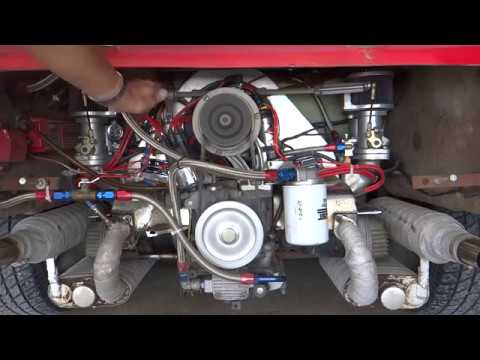
    Very nice VW aircooled engine.

    Any image of the plasma arc?

    Leave a comment:


  • Gary Hammond
    replied
    Here's the second video.

    Leave a comment:


  • Gary Hammond
    replied
    Video 1 of installation

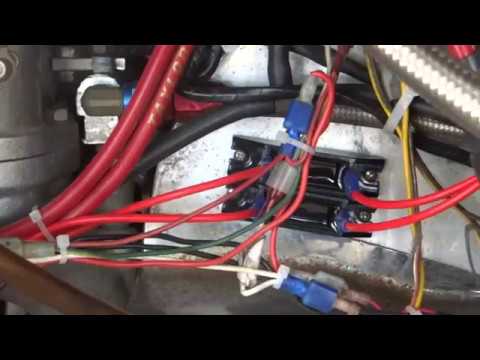
    Installation Update,

    I just posted a couple of videos on U-tube of my plasma ignition installed and running. Here's the first one.

    Leave a comment:


  • heysoundude
    replied
    Originally posted by RB176 View Post
    Haven’t got any of my parts I ordered to try anything yet!
    I was actually asking Faraday88, I believe; I seem to recall he posted the diagrams...

    Leave a comment:


  • RB176
    replied
    Originally posted by heysoundude View Post
    In the schematic pic, the switch location - wouldn't it be on the -ve leg/side of the primary?
    Haven’t got any of my parts I ordered to try anything yet!

    Leave a comment:


  • Gary Hammond
    replied
    Hi Aaron,

    Originally posted by Aaron Murakami View Post
    Gary, that's awesome!

    Besides the plasma, do you have any HHO or other water type of supplementation?

    What is the leanest you can run it without overheating, etc.?
    Thanks

    I haven't tried any fog supplementation yet. I have a 3500 watt gen set I'll probably try that on first.

    I also haven't had a chance to check out how lean I can go, as it still needs a rich mixture to accelerate without hesitation from a standstill. On the open road, at higher speeds, I can lean it out a little more but haven't gone there yet. I'm enjoying the extra power too much!

    Leave a comment:


  • Aaron Murakami
    replied
    Originally posted by Gary Hammond View Post
    Hi All,


    Had the engine out of the Bradley for a while now to access the fuel tank. I needed to add a bottom fuel outlet to the tank, relocate the external fuel pump, hook the normal tank vent back up, block off the vent in the filler cap, remove the low pressure filter ahead of the pump and replace it with a high pressure filter after the pump. I did all this to cure a vapor lock problem it was having in hot weather. That and a fuel spillage problem from the filler cap when the tank was full. (Ruined a paint job.)

    Got every thing back together today and installed the plasma ignition as well. Took it for a rest drive this evening and it runs better than ever. Pulls strong all the way to 6000 RPM. Leaned out the mixture slightly, but if I go too far lean it bogs on initial launch at part throttle.

    The engine starts very quickly and there is no hint of vapor lock!
    Gary, that's awesome!

    Besides the plasma, do you have any HHO or other water type of supplementation?

    What is the leanest you can run it without overheating, etc.?

    Leave a comment:

Working...
X