Announcement

Collapse
No announcement yet.

John Bedini's Magnetic Model

Collapse
X
 
  • Filter
  • Time
  • Show
Clear All
new posts

  • min2oly
    replied
    Originally posted by elmar View Post
    Yesterday I watched the pictures to get to know more about the circuit he uses. Lot of confusion (subjectively, in my mind) about that.
    Apparently there is only a 2N3055H and a diode used, maybe a few resistors...or do the LED´s the job?

    But on the internet: No information on that, only other, more complex circuits - up to reed switch circuits.
    I have seen some closeups of that particular machine, any my confused mind tends to think: Did he hide the circuit also in the wooden box underneath of it?

    I don´t think so, for sure he did not. I only see the transistor on a small front plate, and in the few archieves I have access to, apparently, nobody dares to ask how he set up the circuit on that particular ball rotor machine.

    No doubt, JB always tried to to make circuits as simple as possible.

    JB says: "The circuit powering this is the monopole circuit, one pulse at a time. The coil that is horizontal is the generator coil for the capacitor, the LED´s are just indicator for the North and South poles passing. This is a straight Bedini/Cole motor, monopole switching. It is just a model so I would never forget what I learned. The real machine was dismantled when cole died. I´m giving the book to people, the 1971 lab notes of the different monopoles I built, another 40 pages in experiments. The rest you will find in the dump one day."

    But the reference is "text only" from the internet ... did he speak specifically about the motor with the ball rotor? I don´t know.

    He points out the 40 page book he gave to people, it´s available in 2nd edition of Bedini-Bearden Years: "Free energy generation". I purchased it from cheniere.org.

    Also reliable reference ... he gives in the booklet information for four types of window motors, one of them the motor with the ball rotor.

    I can rely on the booklet, but it is from 1971 --- in 2009 JB gives interviews on that particular machine where he says he built it in 1984, I´ve seen it on DVD#40, associated with the book.

    Surely it has been developed since then, but I guess he has given all the basics in the booklet.

    In the interview (2009) he is standing next to the machine, pointing with a steel rod towards it. In that situation he also talks about the Watson Machine.
    This information I can rely on. I don´t see very complex circuit also on this machine. I can see him and the machine at the same time. I conclude the information given here must be true.

    He also says in that interview:

    "By the way it is about the same time as we were working with "Sparky" Sweet with cross wound coils. So everything I learned about cross wound coils I incorporated in this motor. Because these two coils cannot interfere with each other, they are 90 degrees apart, opposed. So one becomes the generator and what you´re looking at here, is the same piece that´s in the tesla switch right here you see the charge and then the discharge in opposite phases in the angle, and that´s the pulse that runs into the batteries."

    ---

    Now what follows is my personal opinion and it only reflects some of my own thinking. I´m not saying that it is the truth, it only reflects what I think at the current time:

    From the few things I have studied, he does not talk about unity or overunity.

    He talked about ou in his speech on an energy conference I mentioned above, though, kind of, it´s out there and we have to take advantage of it. He has a solid attitude towards it, kind of saying, what to say if it is ou, when the batteries are still part of the circuit, and they are in place for nine years now (and he didn´t mention the machine running 24/7 since then), but they are obviously dead, how should he dare saying it is ou when the batteries are still in place and the machine running? He would have to take away the batteries... (I heard him saying something like that, but these really are my interpretations of it...don´t take it for granted)

    Now more guesswork from my person:

    Also I think in circuits with batteries you cannot talk about unity or overunity at all, because you will always have to invest some energy in order to keep the system running. And with batteries you will alway loose part of the energy you have invested.

    But nevertheless you are tapping into an energy source that is unity or overunity in itself. You have access to that vast amount of energy, but have to figure out means to use it freely. I guess one has to invest for it, even when it´s a small amount, like 6V/3 mA.

    And the ball rotor machine comes very near to it.

    I also think it is worth of discussion and it fits into this tread, because some things weren´t even mentioned, like the drive systen he hooks to it and the momentum it generates from the eddie currents...but that´s for others, not for me.

    What I can do, I can build this machine, if it runs or not, who dares? There´s so much learning associated with that particular build, it´s worth doing anyway.

    Cheers,

    Elmar
    I look forward to hearing about your efforts.

    I re-watched and must have misunderstood him the first time, he is talking about 4 phases not 4 switchings.

    "you're seeing this phase, then this phase, then this phase, then this phase." He points to the LED's one at a time.

    so somehow it would seem he is does have the genny coil feeding back into the system.
    what we know:

    1. two coils at 90 degrees
    2. drive coil 2 winds/filer 900 turns smaller gauge
    3. genny coil also 2 winds/filer 300 turns larger gauge
    4. 4 LED's one for each "phase"
    5. carbon graphite ball
    6. aluminium cylinder with fan to show work adjust speed who knows what else.
    7. Basic SSG circuit

    I wonder if he is using a switching diode somehow to put the energy back to the source as the original simplified school girl circuit did?
    -Patrick

    Leave a comment:


  • min2oly
    replied
    Originally posted by Faraday88 View Post
    Hey Patrick,
    Im intrigued by this aspect and its implications : Do you see when JB talks about "it" speeding up when he aligns the aluminium cylinder... he is bringing the aluminum closer to the spinning ball (magnets) and it speeds up due to lenz-law (eddie currents). JB demonstrates this in the video i posted earlier.
    I wonder how a lenz's effect which retards the motion would actually help in speeding it up???? we all know a loaded Genny coil also speeds up the SSG rotor. is the same action at work here as well..? how did John foresee this..tha's all the more interesting!!!i must say..
    Best Regards,
    Faraday88.
    I see now my typing and explanation were lame. what I meant here was the fan rotor speeds up rather than the ball rotor. The ball rotor most likely slows down because it is pulling the fan...

    However...

    Now that you say that out loud and as I type now, I wonder??? I will give this a spin/try later today.
    -Patrick

    Leave a comment:


  • elmar
    replied
    Originally posted by min2oly View Post
    This is all very interesting to me. I think there could be some misinterpretation going on. Not on your part but on others who have been around him. JB was not always understood for the meaning he was trying to convay.

    So the "running for years" part is an assumption on the interviewer's part and John answers a different question all together bringing up the Watson machine. I'm pretty sure I remember him saying he did not run it 24/7 - most times it just sat there motionless, he would fire it up now and then with, yes, "the same batteries"... I'd still like someone to point out where JB actually said this window motor or any other window motor he had ran unity or over unity.

    regarding neo's, JB made a clear statement on the old WindowMotor yahoo forum, if you want power, use neo's if you want lower amp draw use ceramic's. When I read that old forum we can clearly see JB is doing his best to build something that will get to unity but never comes out and says he does.

    Do you see when JB talks about "it" speeding up when he aligns the aluminium cylinder... he is bringing the aluminum closer to the spinning ball (magnets) and it speeds up due to lenz-law (eddie currents). JB demonstrates this in the video i posted earlier.

    Yes this is a representation of the watson as well as the SSG and so many other builds. I'm curious about how the timing worked in this original build. He mentions briefly in the vid i posted and you can see the LED's blinking in a staggered fashion that it is triggered more than once. how does he do this with one motor wind using the one SSG circuit?
    Nice thread you have here - thanks
    -Patrick
    Yesterday I watched the pictures to get to know more about the circuit he uses. Lot of confusion (subjectively, in my mind) about that.
    Apparently there is only a 2N3055H and a diode used, maybe a few resistors...or do the LED´s the job?

    But on the internet: No information on that, only other, more complex circuits - up to reed switch circuits.
    I have seen some closeups of that particular machine, any my confused mind tends to think: Did he hide the circuit also in the wooden box underneath of it?

    I don´t think so, for sure he did not. I only see the transistor on a small front plate, and in the few archieves I have access to, apparently, nobody dares to ask how he set up the circuit on that particular ball rotor machine.

    No doubt, JB always tried to to make circuits as simple as possible.

    JB says: "The circuit powering this is the monopole circuit, one pulse at a time. The coil that is horizontal is the generator coil for the capacitor, the LED´s are just indicator for the North and South poles passing. This is a straight Bedini/Cole motor, monopole switching. It is just a model so I would never forget what I learned. The real machine was dismantled when cole died. I´m giving the book to people, the 1971 lab notes of the different monopoles I built, another 40 pages in experiments. The rest you will find in the dump one day."

    But the reference is "text only" from the internet ... did he speak specifically about the motor with the ball rotor? I don´t know.

    He points out the 40 page book he gave to people, it´s available in 2nd edition of Bedini-Bearden Years: "Free energy generation". I purchased it from cheniere.org.

    Also reliable reference ... he gives in the booklet information for four types of window motors, one of them the motor with the ball rotor.

    I can rely on the booklet, but it is from 1971 --- in 2009 JB gives interviews on that particular machine where he says he built it in 1984, I´ve seen it on DVD#40, associated with the book.

    Surely it has been developed since then, but I guess he has given all the basics in the booklet.

    In the interview (2009) he is standing next to the machine, pointing with a steel rod towards it. In that situation he also talks about the Watson Machine.
    This information I can rely on. I don´t see very complex circuit also on this machine. I can see him and the machine at the same time. I conclude the information given here must be true.

    He also says in that interview:

    "By the way it is about the same time as we were working with "Sparky" Sweet with cross wound coils. So everything I learned about cross wound coils I incorporated in this motor. Because these two coils cannot interfere with each other, they are 90 degrees apart, opposed. So one becomes the generator and what you´re looking at here, is the same piece that´s in the tesla switch right here you see the charge and then the discharge in opposite phases in the angle, and that´s the pulse that runs into the batteries."

    ---

    Now what follows is my personal opinion and it only reflects some of my own thinking. I´m not saying that it is the truth, it only reflects what I think at the current time:

    From the few things I have studied, he does not talk about unity or overunity.

    He talked about ou in his speech on an energy conference I mentioned above, though, kind of, it´s out there and we have to take advantage of it. He has a solid attitude towards it, kind of saying, what to say if it is ou, when the batteries are still part of the circuit, and they are in place for nine years now (and he didn´t mention the machine running 24/7 since then), but they are obviously dead, how should he dare saying it is ou when the batteries are still in place and the machine running? He would have to take away the batteries... (I heard him saying something like that, but these really are my interpretations of it...don´t take it for granted)

    Now more guesswork from my person:

    Also I think in circuits with batteries you cannot talk about unity or overunity at all, because you will always have to invest some energy in order to keep the system running. And with batteries you will alway loose part of the energy you have invested.

    But nevertheless you are tapping into an energy source that is unity or overunity in itself. You have access to that vast amount of energy, but have to figure out means to use it freely. I guess one has to invest for it, even when it´s a small amount, like 6V/3 mA.

    And the ball rotor machine comes very near to it.

    I also think it is worth of discussion and it fits into this tread, because some things weren´t even mentioned, like the drive systen he hooks to it and the momentum it generates from the eddie currents...but that´s for others, not for me.

    What I can do, I can build this machine, if it runs or not, who dares? There´s so much learning associated with that particular build, it´s worth doing anyway.

    Cheers,

    Elmar

    Leave a comment:


  • Faraday88
    replied
    Originally posted by min2oly View Post
    This is all very interesting to me. I think there could be some misinterpretation going on. Not on your part but on others who have been around him. JB was not always understood for the meaning he was trying to convay.

    So the "running for years" part is an assumption on the interviewer's part and John answers a different question all together bringing up the Watson machine. I'm pretty sure I remember him saying he did not run it 24/7 - most times it just sat there motionless, he would fire it up now and then with, yes, "the same batteries"... I'd still like someone to point out where JB actually said this window motor or any other window motor he had ran unity or over unity.

    regarding neo's, JB made a clear statement on the old WindowMotor yahoo forum, if you want power, use neo's if you want lower amp draw use ceramic's. When I read that old forum we can clearly see JB is doing his best to build something that will get to unity but never comes out and says he does.

    Do you see when JB talks about "it" speeding up when he aligns the aluminium cylinder... he is bringing the aluminum closer to the spinning ball (magnets) and it speeds up due to lenz-law (eddie currents). JB demonstrates this in the video i posted earlier.

    Yes this is a representation of the watson as well as the SSG and so many other builds. I'm curious about how the timing worked in this original build. He mentions briefly in the vid i posted and you can see the LED's blinking in a staggered fashion that it is triggered more than once. how does he do this with one motor wind using the one SSG circuit?
    Nice thread you have here - thanks
    -Patrick
    Hey Patrick,
    Im intrigued by this aspect and its implications : Do you see when JB talks about "it" speeding up when he aligns the aluminium cylinder... he is bringing the aluminum closer to the spinning ball (magnets) and it speeds up due to lenz-law (eddie currents). JB demonstrates this in the video i posted earlier.
    I wonder how a lenz's effect which retards the motion would actually help in speeding it up???? we all know a loaded Genny coil also speeds up the SSG rotor. is the same action at work here as well..? how did John foresee this..tha's all the more interesting!!!i must say..
    Best Regards,
    Faraday88.

    Leave a comment:


  • min2oly
    replied
    Originally posted by elmar View Post
    Hi Patrick,

    when asked how the motor with the ball rotor runs for years with the same batteries I found John Bedini saying the following on DVD#40:


    "It´s a representation of a Watson motor. I actually built this motor in 1984. And it´s the motor Tom Bearden talks about - it was under the bench - that kept running.
    By that time Watson had already given his demonstration. And it disappeared from the scene. And so I wanted to keep the technology."

    I also like John`s simplicity when it comes to overunity...

    "And people have asked for years: "How can it stay on these batteries and do this...well, we haven´t done anything. Tony has been filming up here for the past three years. And the motor is always set there, you know, we´re never really out to get it shut and nobody ever really asked any questions about what the motor was."


    He also says he´s using neos with it:

    "It´s all based upon that the magnetic fields, they´re rotating and spinning and so you can take advantage of all that. And people don´t understand that aluminium is very magnetic under these neo-boron magnets and so what happens is eddy currents form in here and you can save it, when it (JB aligns the aluminium cylinder) gets the current right then the thing just speeds up from in here, right in here somewhere (JB lifting slightly axis on one of its ends). When the currents is just right and you get the right drag you have your fastes rpm.
    This shows the principle of the Watson machine. You know, the rotor is spinning, which the rotor is in the center here and the generator is out here (horizontal window coil) and it´s very magnetic out here (JB demonstrates with an iron rod). It snatches it towards it. And so the fields are huge out here and you can see the rod moving around. So the fields are way out, out around the machine..."


    I finished now the rotor, starting with two 20mm neo disks on a 8mm iron rod in a 3 inch plastic ball.

    I can make larger coils on this machine, like he did. It´s a good playground for me learning about the magnets and the coils.

    Since there are only two magnets used, N-S to each other, the iron sleeve becomes part of the permanent magnets.

    IMO it can be considered as one larger magnet moving inside of a window coil. A good object for study.

    Cannot say much about the super poles, but that´s a good place to start for me ...

    Elmar
    This is all very interesting to me. I think there could be some misinterpretation going on. Not on your part but on others who have been around him. JB was not always understood for the meaning he was trying to convay.

    So the "running for years" part is an assumption on the interviewer's part and John answers a different question all together bringing up the Watson machine. I'm pretty sure I remember him saying he did not run it 24/7 - most times it just sat there motionless, he would fire it up now and then with, yes, "the same batteries"... I'd still like someone to point out where JB actually said this window motor or any other window motor he had ran unity or over unity.

    regarding neo's, JB made a clear statement on the old WindowMotor yahoo forum, if you want power, use neo's if you want lower amp draw use ceramic's. When I read that old forum we can clearly see JB is doing his best to build something that will get to unity but never comes out and says he does.

    Do you see when JB talks about "it" speeding up when he aligns the aluminium cylinder... he is bringing the aluminum closer to the spinning ball (magnets) and it speeds up due to lenz-law (eddie currents). JB demonstrates this in the video i posted earlier.

    Yes this is a representation of the watson as well as the SSG and so many other builds. I'm curious about how the timing worked in this original build. He mentions briefly in the vid i posted and you can see the LED's blinking in a staggered fashion that it is triggered more than once. how does he do this with one motor wind using the one SSG circuit?
    Nice thread you have here - thanks
    -Patrick

    Leave a comment:


  • elmar
    replied
    Originally posted by min2oly View Post
    Hi Elmar,
    one of the reasons I like your thought on using super poles for this build is partially what Tom is talking about and I was also re-reading the old WindowMotor yahoo group. John talked about needing to use ceramic magnets, getting away from the neo's. He also mentioned the geometry on the windowmotor kits rick sold was all wrong. My ceramic build was always the closest to unity.

    It makes sense that he called this a toy motor. He had not perfected it yet. When I read the old group you can tell he was still experimenting with it. He mentions getting his build down to 15mA's. To be honest, I would be surprised if he ever got one of his windowmotor builds to overunity or even unity. I can't remember if I ever heard him say he did. Anyone....?
    -Patrick
    Hi Patrick,

    when asked how the motor with the ball rotor runs for years with the same batteries I found John Bedini saying the following on DVD#40:


    "It´s a representation of a Watson motor. I actually built this motor in 1984. And it´s the motor Tom Bearden talks about - it was under the bench - that kept running.
    By that time Watson had already given his demonstration. And it disappeared from the scene. And so I wanted to keep the technology."

    I also like John`s simplicity when it comes to overunity...

    "And people have asked for years: "How can it stay on these batteries and do this...well, we haven´t done anything. Tony has been filming up here for the past three years. And the motor is always set there, you know, we´re never really out to get it shut and nobody ever really asked any questions about what the motor was."


    He also says he´s using neos with it:

    "It´s all based upon that the magnetic fields, they´re rotating and spinning and so you can take advantage of all that. And people don´t understand that aluminium is very magnetic under these neo-boron magnets and so what happens is eddy currents form in here and you can save it, when it (JB aligns the aluminium cylinder) gets the current right then the thing just speeds up from in here, right in here somewhere (JB lifting slightly axis on one of its ends). When the currents is just right and you get the right drag you have your fastes rpm.
    This shows the principle of the Watson machine. You know, the rotor is spinning, which the rotor is in the center here and the generator is out here (horizontal window coil) and it´s very magnetic out here (JB demonstrates with an iron rod). It snatches it towards it. And so the fields are huge out here and you can see the rod moving around. So the fields are way out, out around the machine..."


    I finished now the rotor, starting with two 20mm neo disks on a 8mm iron rod in a 3 inch plastic ball.

    I can make larger coils on this machine, like he did. It´s a good playground for me learning about the magnets and the coils.

    Since there are only two magnets used, N-S to each other, the iron sleeve becomes part of the permanent magnets.

    IMO it can be considered as one larger magnet moving inside of a window coil. A good object for study.

    Cannot say much about the super poles, but that´s a good place to start for me ...

    Elmar
    Last edited by elmar; 11-17-2017, 10:46 AM.

    Leave a comment:


  • min2oly
    replied
    Hi Elmar,
    one of the reasons I like your thought on using super poles for this build is partially what Tom is talking about and I was also re-reading the old WindowMotor yahoo group. John talked about needing to use ceramic magnets, getting away from the neo's. He also mentioned the geometry on the windowmotor kits rick sold was all wrong. My ceramic build was always the closest to unity.

    It makes sense that he called this a toy motor. He had not perfected it yet. When I read the old group you can tell he was still experimenting with it. He mentions getting his build down to 15mA's. To be honest, I would be surprised if he ever got one of his windowmotor builds to overunity or even unity. I can't remember if I ever heard him say he did. Anyone....?
    -Patrick

    Originally posted by elmar View Post
    Thanks to all of your contributions.

    I understand now, in the book I mentioned: "The Magnetic Window Motor", 1971 from John Bedini, in the 40 pages there are only three pages about the motor with the ball rotor. Neos are used here, mounted on an iron sleeve.

    The window coils are mentioned and a circuit diagram is given, no wire thickness or approximate length of wire given.

    JB also calls it a toy motor - I start building parts of it, like the ball rotor - for fun.

    Meanwhile I may have evoked some interest in that particular device, so that, hopefully, some more fragments of information will be collected.

    Regards,

    Elmar

    Leave a comment:


  • elmar
    replied
    Thanks to all of your contributions.

    I understand now, in the book I mentioned: "The Magnetic Window Motor", 1971 from John Bedini, in the 40 pages there are only three pages about the motor with the ball rotor. Neos are used here, mounted on an iron sleeve.

    The window coils are mentioned and a circuit diagram is given, no wire thickness or approximate length of wire given.

    JB also calls it a toy motor - I start building parts of it, like the ball rotor - for fun.

    Meanwhile I may have evoked some interest in that particular device, so that, hopefully, some more fragments of information will be collected.

    Regards,

    Elmar

    Leave a comment:


  • Aaron Murakami
    replied
    Originally posted by Dave Wing View Post
    Ok I resized them...
    Thanks, that worked!

    Leave a comment:


  • Dave Wing
    replied
    Originally posted by Aaron Murakami View Post
    Hi Dave, can you post these larger? They came up very small for me.
    Ok I resized them...

    Leave a comment:


  • Aaron Murakami
    replied
    Originally posted by Dave Wing View Post
    This may help you with some place to start until Aaron publishes the materials at some future date. These are old posts I gathered some time ago... From someone else who posted them.

    Dave Wing
    Hi Dave, can you post these larger? They came up very small for me.

    Leave a comment:


  • Aaron Murakami
    replied
    Originally posted by elmar View Post
    Aaron,

    according to the book, in the "motor with the ball rotor inside the magnetic window coils", two neodymium-iron-boron magnets mounted into a plastic ball are used, assembled on an iron spacer.

    However, it is not clear to me if they are superpole or not. They are rather not, I guess. I cannot imagine glueing two repelling neos together.

    So I cut an iron rod and mounted two neos on it as suggested in the book. Holding another magnet near to it, one attracts, one repels, the neos adhere to the iron spacer.

    For the time being, I can continue in my search for the Bedini glass case motor, making rotor, coil, plastic ball and basic configuration of circuit.

    In the meantime, there may be others here on this forum who may mave heard of some details about that particular motor type.

    I find this motor fascinating and I will stick to this for a while.

    Thanks for help,

    Elmar
    Elmar,

    With the two neo magnets in the ball, they are not in a superpole configuration. One is N out and the other is S out. The iron spacer makes it like one big magnet but the point is that there is a single face of each pole facing out on opposite sides.

    From what you describe, you have assembled the rotor's magnet configuration properly.

    Leave a comment:


  • Dave Wing
    replied
    Originally posted by elmar View Post
    The super pole concept

    Hello, I´m new here in this forum, this is my first post. I don´t want to create a new thread so this is the only reference I found on the forum regarding Bedini Glass Case Motor: The super pole concept.

    I purchased the book Free Energy Generation, 2nd edition (Tom Bearden, cheniere.org) and associated DVD (#40). As I am writing this, I charge a 12V 59Ah lead/acid battery with a Bedini SG type- Device I built from an old PC fan.
    By that I want to make sure that I know I am an absolute beginner in this but I study this only half a year now, and I am progressing...

    My question is: In the above mentioned book there´s a booklet entitled "The Magnetic Window Motor", 1971. It´s right at the beginning of the book, on page 3. There I can read:

    (Citation from the book):

    "I, John Bedini, have invented a new type of electromagnetic motor. The motor uses mono poles, or super conducting ferrite magnets. The magnets aree put together in a very simple way...

    By putting the magnets together in this simple way, we can get a super mono pole magnet. We can make up a super North and a super South. By arrangement of the mono poles in North and South configurations, we can make up a two-pole rotor, a six-pole rotor or a rotor of up to 12 poles...

    This type of motor, however, needs no iron poles and runs inside a window coil..."

    (End of Citation)

    There are also graphics in between the lines that show a pair of magnets facing N-N and a pair facing S-S. The (equal) poles seem to attract each other.
    In fact when I take a piece of steel I can attach two magnets on each side with the same pole, and on the outside of the magnets will be also N-N or S-S.

    But in the book I see nothing in between the magnets, neither is there any explanation as to how John Bedini puts N-N or s-S together to create the super poles.

    In the DVD John Bedini also points out that the aluminium cylinder spinning on top on this device (IMHO has a momentum on its own. He says aluminium can be magnetic, this has to do with the radiant field the motor generates, and the cylinder gets part of its spin from it. That´s why the axis of the Al cylinder is movable so that it can be arranged for the right resonance. He pointed out that the green LED or Neon lamps (I don´t know what lamps he used) function like a tesla switch. In fact, I see no wires attached to them. (all said IMHO).
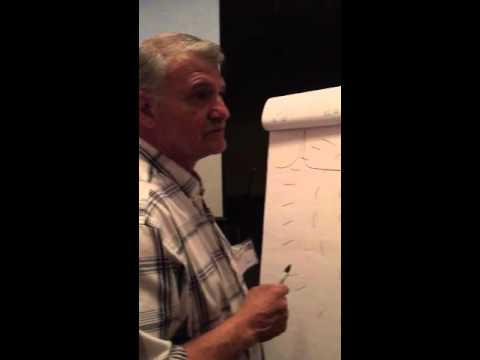
    I find it absolutely breathtaking, the motor runs on 6Volts, fed from a few battery cells. He did not replace them for years, they are crubmling apart at times but the cells are only important for the circuit he tells, not for the energy supply, awsome!

    Sometimes he calls it the Bedini Glass-Case Motor.

    I understand the super mono pole magnets that are used in this Window-Motor are an essential factor to it, but how to put them together? In a way that they radiate N-N or respectively S-.S on each side, sticking together at the same time?

    Can anyone help on this or show me a topic on this forum where this has been already discussed?

    By the way, I aimed at purchasing the book-series from Aaron Murakami already, which I will do in the nearer future. If there are any pinpointers or references regarding my question on these books I would also very much appreciate any help.

    elmar

    And some more pics...

    Dave Wing
    Attached Files

    Leave a comment:


  • min2oly
    replied
    Hi Elmar,
    Here's JB having a nice little conversation on some parts of the "Glass Case" or "Space Flux" motor:


    Originally posted by elmar View Post
    Patrick,

    now I understand, they are forced together machanically. Super glueing is fine, I may build a 3D printed rotor to hold them in place.

    It appears also to me there is very little on the Supe Pole Window Motor (Bedini Glass Case Motor) on the web, although it is well explained in the book (I forgot to mention, 2nd edition).

    Thanks for replying, and help.

    P.S.: https://youtu.be/mXuhoRlMKns?t=7m50s Yes the super north looks exactly like the sketch in the book

    Elmar

    Leave a comment:


  • Dave Wing
    replied
    Originally posted by elmar View Post
    The super pole concept

    Hello, I´m new here in this forum, this is my first post. I don´t want to create a new thread so this is the only reference I found on the forum regarding Bedini Glass Case Motor: The super pole concept.

    I purchased the book Free Energy Generation, 2nd edition (Tom Bearden, cheniere.org) and associated DVD (#40). As I am writing this, I charge a 12V 59Ah lead/acid battery with a Bedini SG type- Device I built from an old PC fan.
    By that I want to make sure that I know I am an absolute beginner in this but I study this only half a year now, and I am progressing...

    My question is: In the above mentioned book there´s a booklet entitled "The Magnetic Window Motor", 1971. It´s right at the beginning of the book, on page 3. There I can read:

    (Citation from the book):

    "I, John Bedini, have invented a new type of electromagnetic motor. The motor uses mono poles, or super conducting ferrite magnets. The magnets aree put together in a very simple way...

    By putting the magnets together in this simple way, we can get a super mono pole magnet. We can make up a super North and a super South. By arrangement of the mono poles in North and South configurations, we can make up a two-pole rotor, a six-pole rotor or a rotor of up to 12 poles...

    This type of motor, however, needs no iron poles and runs inside a window coil..."

    (End of Citation)

    There are also graphics in between the lines that show a pair of magnets facing N-N and a pair facing S-S. The (equal) poles seem to attract each other.
    In fact when I take a piece of steel I can attach two magnets on each side with the same pole, and on the outside of the magnets will be also N-N or S-S.

    But in the book I see nothing in between the magnets, neither is there any explanation as to how John Bedini puts N-N or s-S together to create the super poles.

    In the DVD John Bedini also points out that the aluminium cylinder spinning on top on this device (IMHO has a momentum on its own. He says aluminium can be magnetic, this has to do with the radiant field the motor generates, and the cylinder gets part of its spin from it. That´s why the axis of the Al cylinder is movable so that it can be arranged for the right resonance. He pointed out that the green LED or Neon lamps (I don´t know what lamps he used) function like a tesla switch. In fact, I see no wires attached to them. (all said IMHO).

    I find it absolutely breathtaking, the motor runs on 6Volts, fed from a few battery cells. He did not replace them for years, they are crubmling apart at times but the cells are only important for the circuit he tells, not for the energy supply, awsome!

    Sometimes he calls it the Bedini Glass-Case Motor.

    I understand the super mono pole magnets that are used in this Window-Motor are an essential factor to it, but how to put them together? In a way that they radiate N-N or respectively S-.S on each side, sticking together at the same time?

    Can anyone help on this or show me a topic on this forum where this has been already discussed?

    By the way, I aimed at purchasing the book-series from Aaron Murakami already, which I will do in the nearer future. If there are any pinpointers or references regarding my question on these books I would also very much appreciate any help.

    elmar
    This may help you with some place to start until Aaron publishes the materials at some future date. These are old posts I gathered some time ago... From someone else who posted them.

    Dave Wing
    Attached Files
    Last edited by Dave Wing; 12-14-2023, 07:54 AM.

    Leave a comment:

Working...
X